
A clinical-stage biotech needed a brand and website that could hold up in investor meetings. I was handed a logo, a positioning doc, and a tight timeline. The client team kept shifting. We kept moving forward.
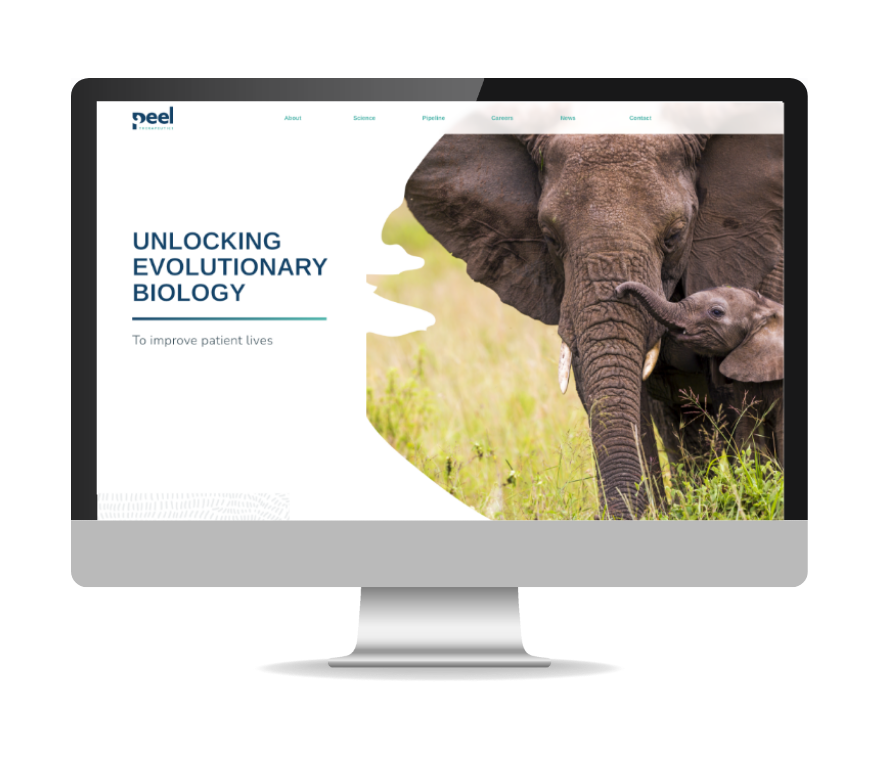

Peel Therapeutics is a clinical-stage biotech with real science, an optimistic team culture, and a real opportunity to connect with investors. What they didn't have: a brand, a website, or a clear picture of what they wanted either to look like. The engagement kicked off with an internal logo handoff through a short meeting. My job was to figure out the rest.
Strategy, client reviews, art direction for 4 marketing designers, and full coordination across content, dev, and PM — from kickoff to launch.
I went straight to the source — brand workshop notes, positioning documents, SWOT analysis, competitive landscape. Everything the client had produced before I was in the room. That research pointed to one clear direction:
Nature-inspired science, investor-focused storytelling, and a team that believed they were doing something genuinely new.
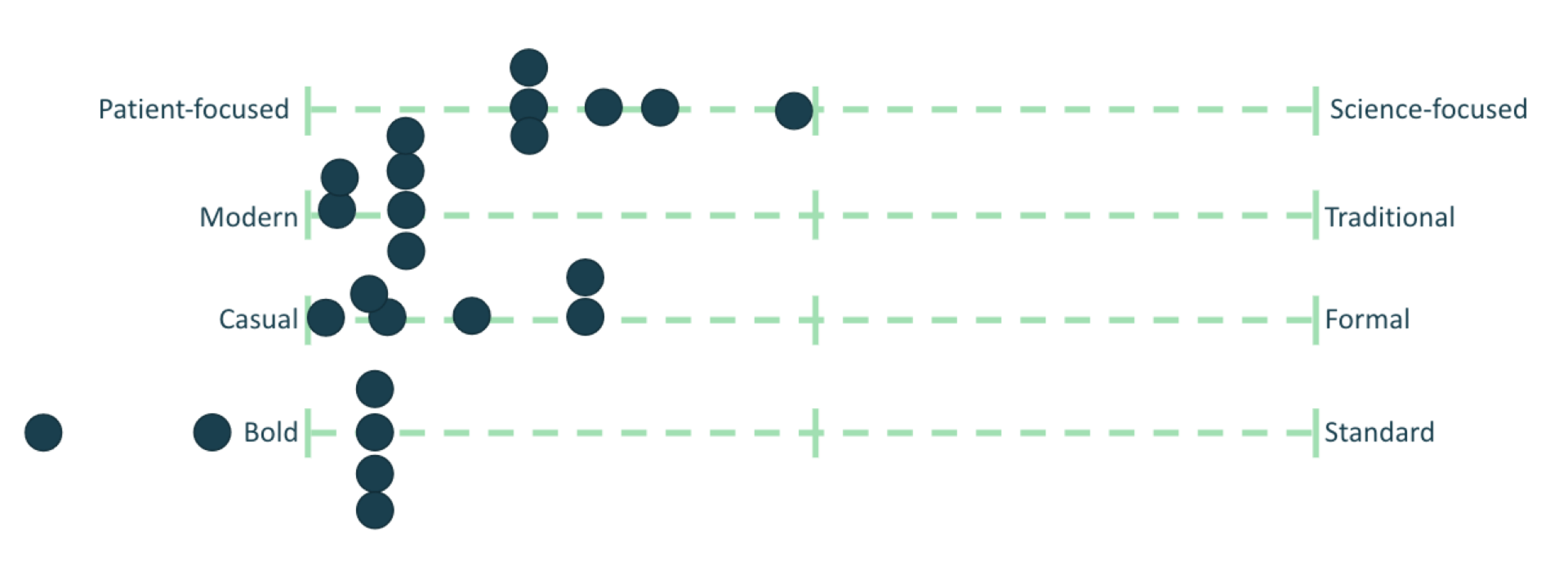
I translated those raw materials into two distinct style tile directions — not to give them options, but to create a structured conversation. Bold vs. refined. Science-forward vs. nature-inspired. The goal wasn't a pick. It was alignment.
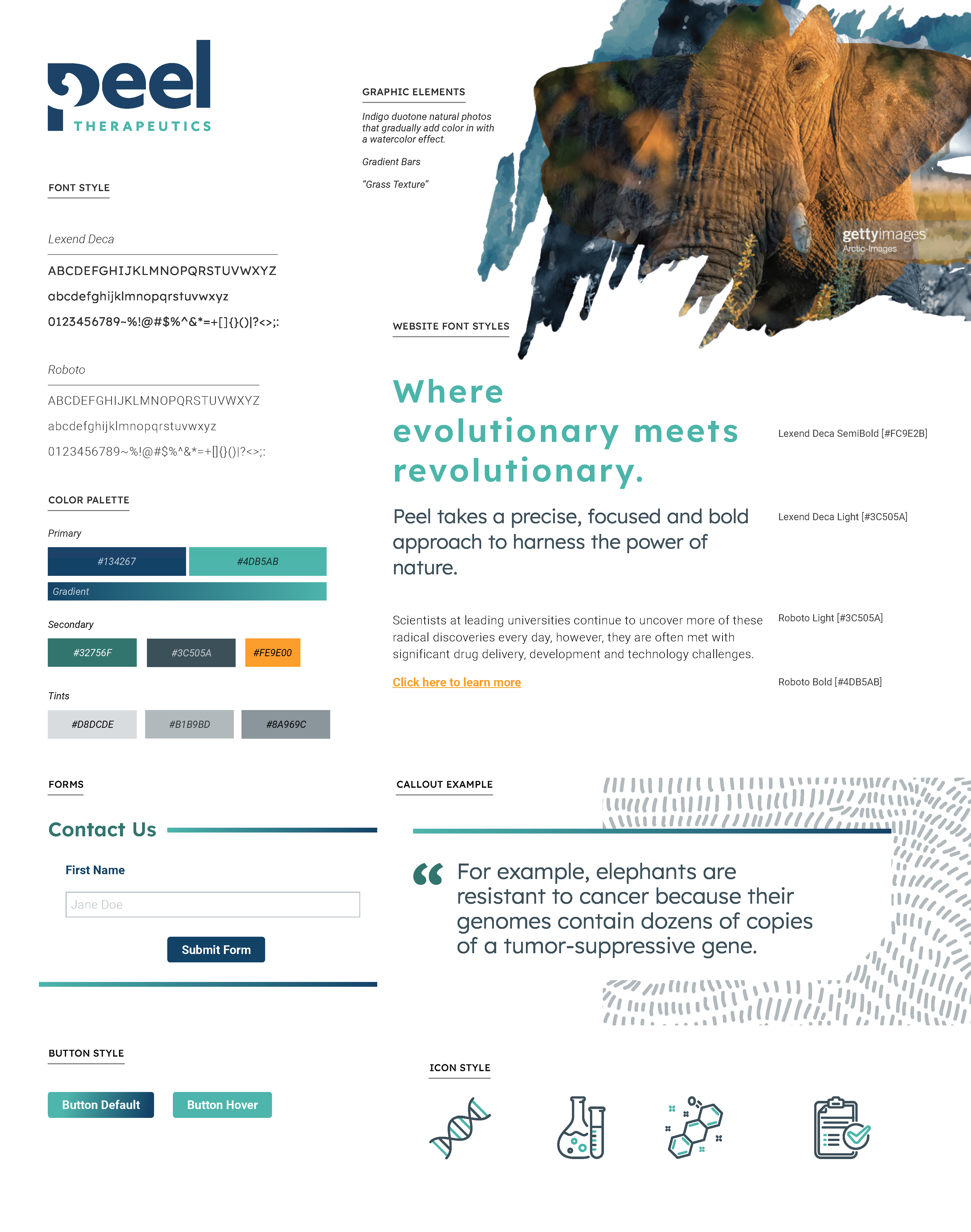
Option A
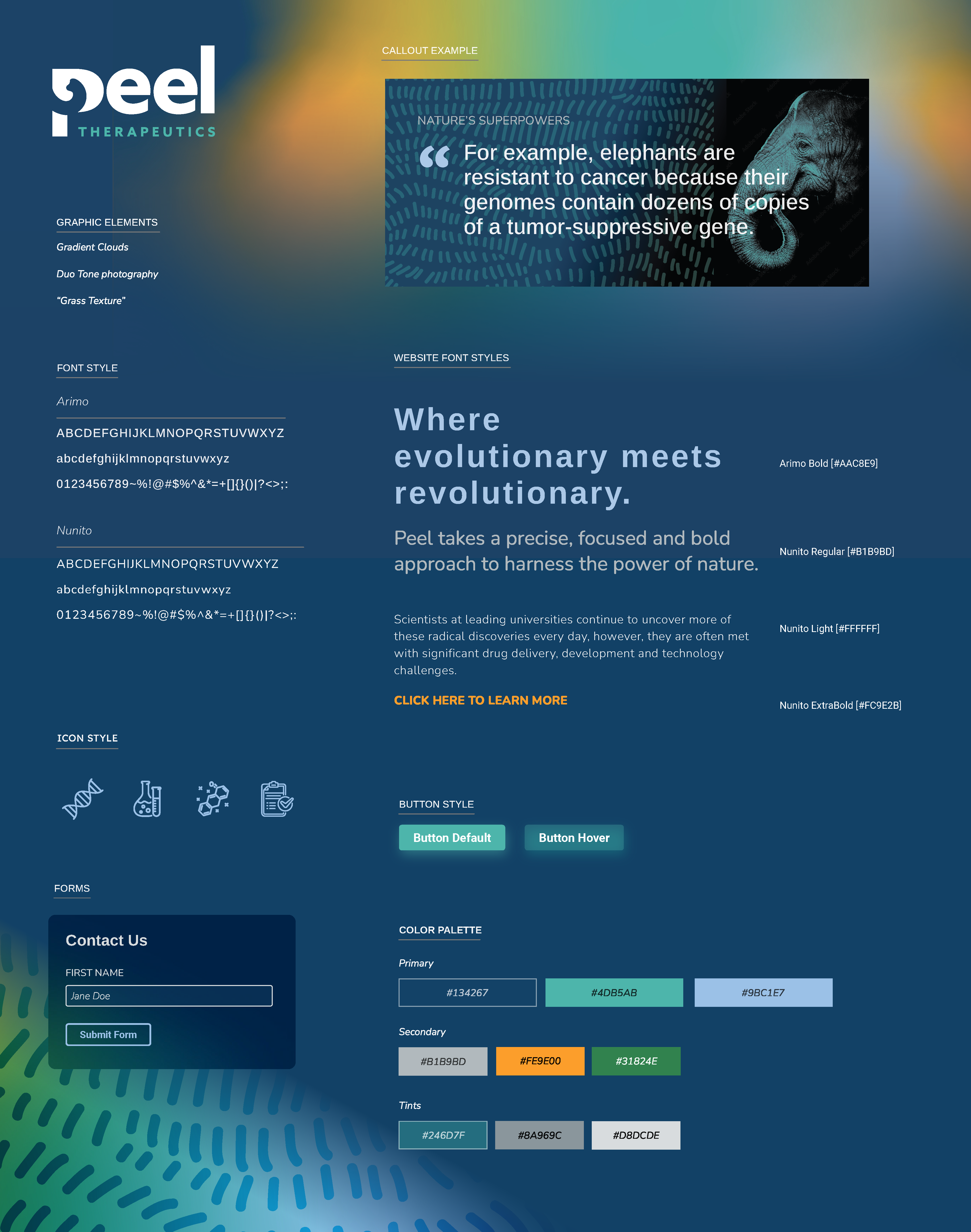
Option B
Stakeholders landed on A — clean, science-focused — but loved specific elements from B. We had our direction. I began art directing the marketing design team on brand collateral while the website design moved in parallel.
We'd built a cohesive 7-page web experience. Then Peel asked for a hard pivot — less patient-focused, more science-forward. And while they were at it, could we add a page?
We mapped every request against what was actually feasible — the budget, the existing templates, the dev build already in progress. Cross-functional, fast, and focused on solutions not problems.
The client needed science-forward imagery.
In the strategy session, I learned we had headshot shoot already on the books. For a few hundred dollars more they get custom lab shots. Right images. Right budget.
Created wireframe-level frameworks with character counts efficient reflow.
Seven pages of copy needed to shift in tone without rebuilding templates. Science-forward copy. No rework.
Proposed enhancing the existing Science page with motion.
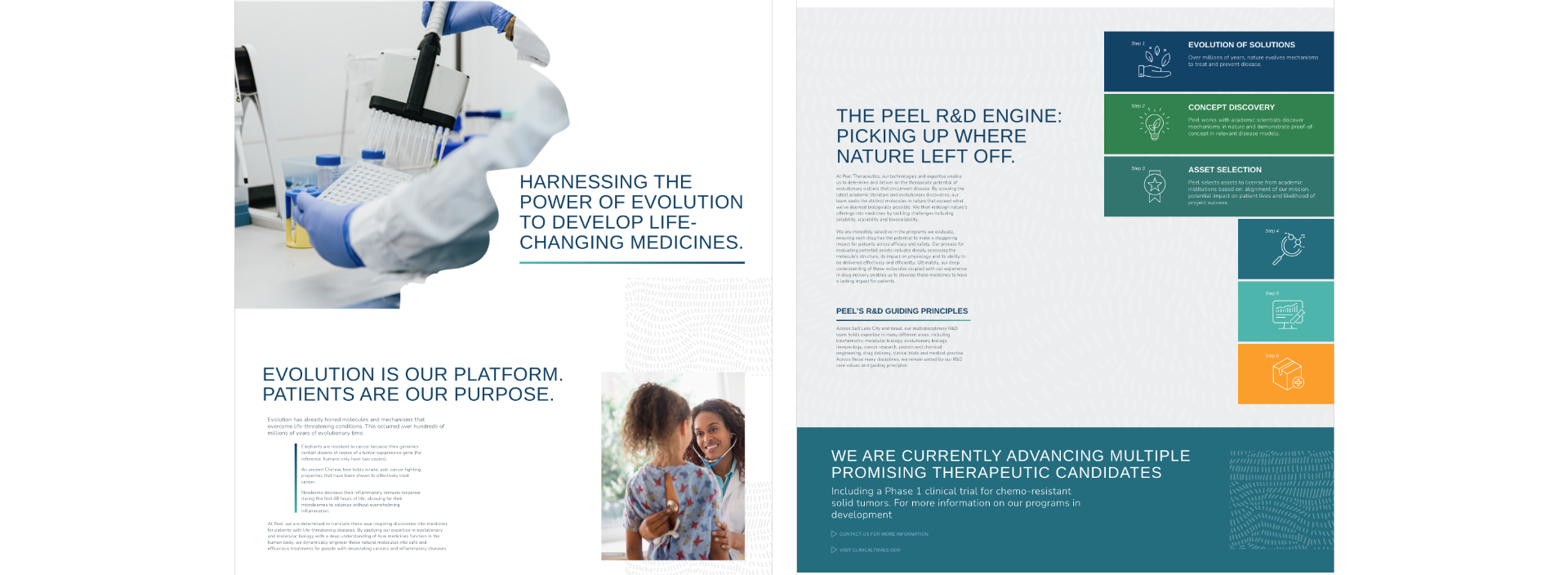
Pitched adding a motion-driven R&D section to the existing Science page instead of building a new one. Same impact. No scope expansion.
The final brand system had to signal credibility to investors while honoring the "evolutionary outlier" identity Peel had built their whole narrative around.
The final home and about pages reflected every layer of the alignment process — style tile decisions, science-forward shift, content reflow — without rebuilding a single template.
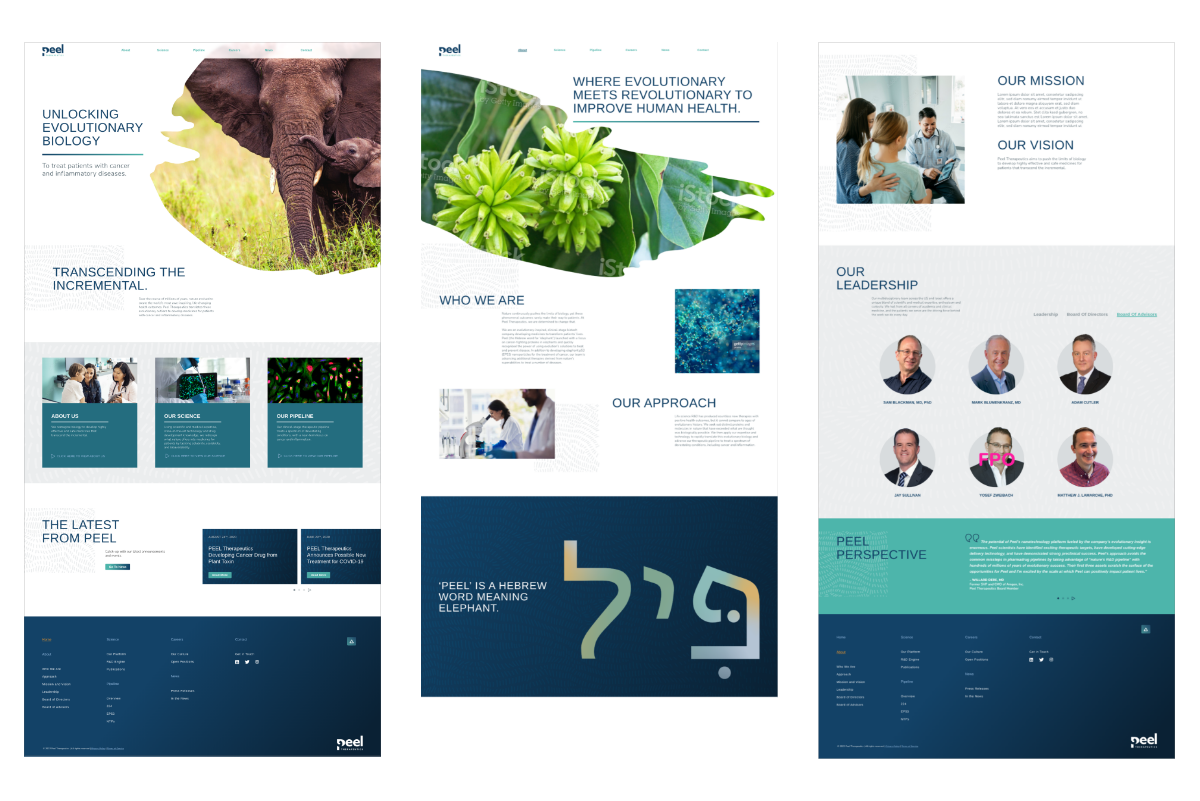
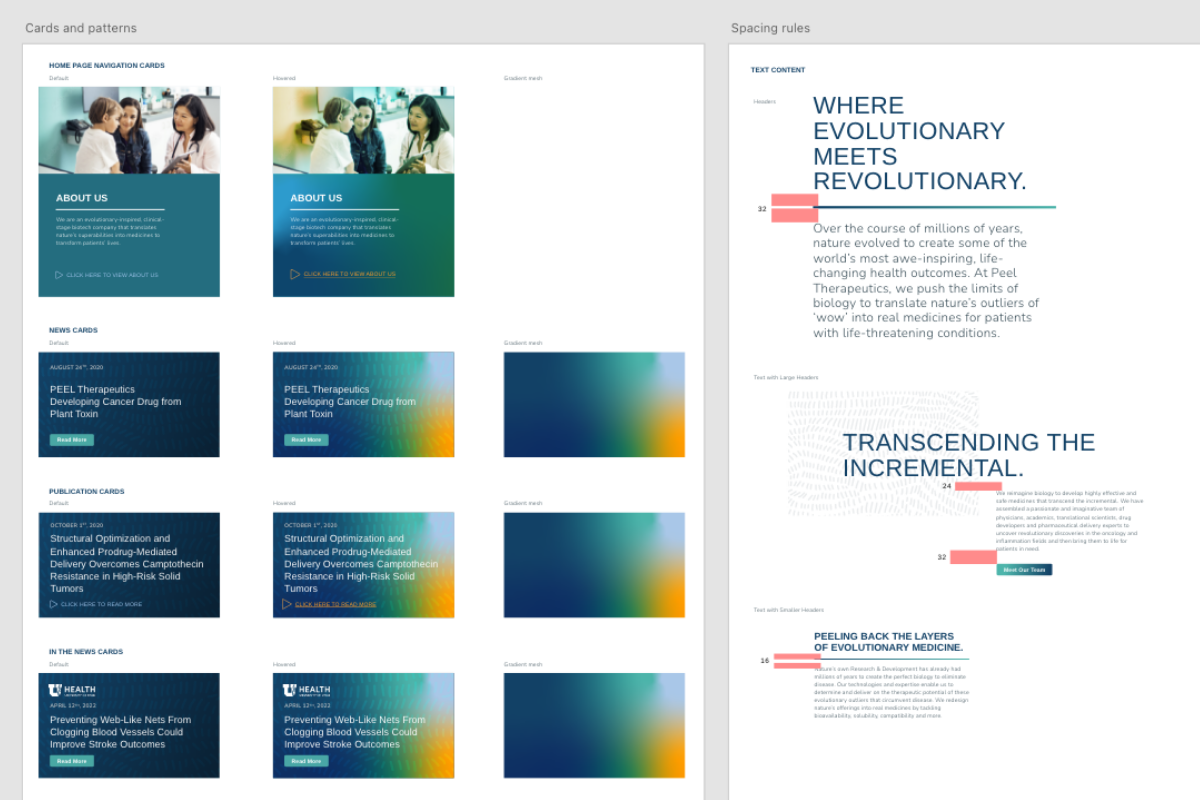
The design system was built around how the whole team worked — spec sheets matched dev processes, assets were sized so collateral designers could build in parallel without waiting on approvals.
Photography sourced. Content reflowed. Motion added to the Science page. Two weeks. No restarts.
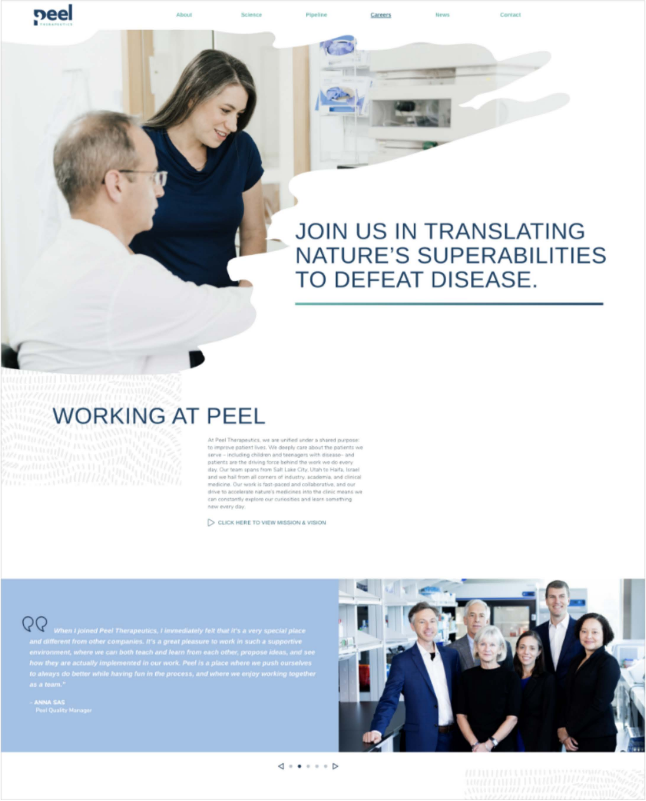
The careers page put the brand's full range to work — custom lab and team photography, content that reflected their culture, and a layout that let their personalities come through.
The enhanced Science page with the motion-driven R&D section. Their lab equipment, their team, their technology — made visible.
[Vimeo timestamp: See it in motion → 1:24]
Peel wanted bold, and they wanted motion to attract investors. This walkthrough pitched every interaction concept page by page, giving the client a real feel for the brand before a single line of code was written.
"You carefully consider client needs and really listen to feedback — which makes people feel part of the process."
The pivot added two weeks. But the misalignments that caused it weren't unique to Peel. I built systems to make sure they didn't happen again.
Knowing your audience before the brief does.
Over time I identified recurring audience gaps across clients — patients, caregivers, press contacts, job seekers — and built personas the team could pull before decisions were made. Less guesswork per project. Less scope creep per launch.
Keeping clients accountable to move projects forward.
Design reviews were becoming the only time stakeholders discussed direction. I built a framework that opened every meeting with their own words — brand outputs, prior feedback, approved directions. Scope held. Revisions dropped.
I've helped teams close funding, launch with confidence, and build brands that earn trust. If you're ready to move forward — or just need to talk through where to start — let's connect.